News
OpenAI’s science blog opens on Craig’s lattice Standard Model candidate, with Astra leading the proof
OpenAI’s science blog opens with GPT-6 Astra’s role in a candidate lattice Standard Model proof that still needs expert review.
OpenAI’s science blog went live on November 15, 2026, and its first guest post is the news: physicist Nathaniel Craig’s account of a candidate lattice definition of the Standard Model, prepared with GPT-6 Astra. Craig says he had a strategy he could not prove in every case it needed to cover, and that Astra turned the strategy into a construction and took the lead in developing the detailed proof. He does not treat the result as finished. The post calls the construction a beginning and leaves reflection positivity at finite lattice spacing open.
Craig is a visiting scientist at OpenAI, leads the particle theory group at the University of California, Santa Barbara, and is a permanent member of the Kavli Institute for Theoretical Physics. The essay, “A step toward defining the Standard Model on a lattice,” points to an October preprint, arXiv:2610.09093. On arXiv the paper is titled “A gauge-invariant measure for lattice chiral fermions,” lists Craig as the sole author, and was submitted on October 6, 2026. The listing describes it as 60+63 pages with 12 figures. The abstract says the work nonperturbatively constructs a gauge-invariant measure for overlap fermions on four-dimensional Euclidean lattices, in a class of nonabelian chiral gauge theories that includes the Standard Model, and that this provides a candidate nonperturbative lattice definition of the Standard Model.
The blog launch is the vehicle, not a separate result. In “Our new blog for science,” also dated November 15, OpenAI says it wants a place for research, methods, and researcher accounts of working with AI, including how to check the work and where a method falls short. The guest-post introduction identifies Craig’s essay as the first guest post on that blog.
What the construction is trying to supply is a definition lattice theorists have not had. The Standard Model describes the known elementary particles and three of the four fundamental forces, but Craig writes that the full theory still lacks a nonperturbative definition, one that does not treat interactions as small corrections. Putting the theory on a lattice—a grid standing in for spacetime—has worked for the strong force, including a quantitative understanding of the proton’s mass from first principles. The weak force is chiral: it treats left-handed and right-handed fermions differently, and the most natural lattice rules produce an extra right-handed partner. The post walks through earlier pieces of an answer: Ginsparg–Wilson lattice rules, overlap fermions from Rajamani Narayanan and Herbert Neuberger, Martin Lüscher’s phase prescription for simpler chiral theories, and explorations by Yoshio Kikukawa and collaborators. Craig writes that the phase alignment for the full Standard Model had remained open for more than 25 years.
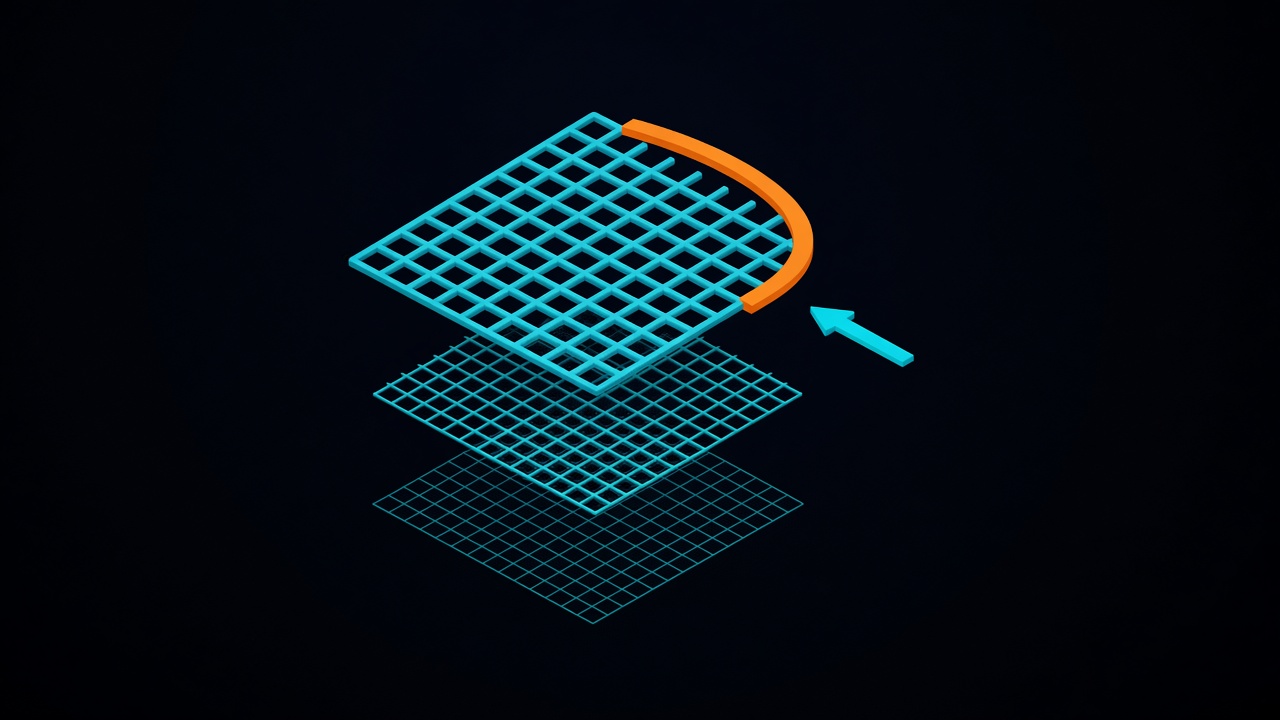
His refinement idea was to represent the force fields on a succession of finer grids, compare allowed fermion states on successive grids, and add those comparisons to obtain the phase rule on the original grid. He says he could not prove that this worked in all the required cases. GPT-6 Astra, in his account, was essential to turning the refinement idea into a working construction. It suggested the right way to carry a given set of force fields onto finer grids, showed that the comparisons on finer grids would converge to a definite answer, and took the lead in developing the detailed proof. He writes that getting from strategy to proof required several rounds with Astra and discussions with outside experts. The result, as he states it, supplies the measure for the Standard Model at finite lattice spacing, under a bound on field strengths at the scale of the grid. The abstract’s version is more specific: on admissible gauge fields, comparing chiral projectors at successive lattice spacings yields an exponentially local current and the global properties needed for Lüscher’s reconstruction of a smooth, gauge-invariant fermion measure.
Lattice field theorists Maarten Golterman, Andreas Kronfeld, and Yigal Shamir looked over Astra’s proof and asked questions Craig says helped him build confidence. He is explicit that scientific dialogue among experts is still required to decide whether the prescription has the properties physicists want.
The limits are in the same section. Craig writes that the method he and Astra proposed is far more an answer in principle than an answer in practice, and that much work lies ahead before it is useful for realistic lattice simulations. He says he is thinking about whether the construction satisfies reflection positivity at finite lattice spacing, a condition that helps connect calculations in this lattice model to a quantum theory in which probabilities are conserved. The construction also does not define the interacting theory in continuous spacetime. Craig points to a separate recent OpenAI proof of the existence of Yang-Mills theory as related context. In his telling, that proof supplied a missing piece and enabled a continuum-limit existence result for the simplest unified Yang-Mills theory that includes the Standard Model’s gauge fields and fermions, starting from overlap fermions on the lattice. That continuum claim sits outside the October preprint, which is about the measure at finite lattice spacing.
Read Craig’s guest post beside the arXiv abstract before treating the measure as settled, and watch whether lattice theorists take up reflection positivity and the gap between an in-principle definition and a simulation method.
Sources
- A step toward defining the Standard Model on a lattice openai.com
- Our new blog for science openai.com
- A gauge-invariant measure for lattice chiral fermions arxiv.org